
Québécois Slang 101: 10 Essential Phrases for Canadian French Students
Stop saying 'Pas du tout'! Learn the authentic Québécois slang like 'C'est plate!' and 'Pantoute!' that every Canadian student needs to know to sound natural and understand friends in Quebec.
11/15/20253 min read
Know
Bonjour les amis! If you're learning French in Canada, you've probably noticed that the French spoken here sometimes has a unique flavour – especially in Quebec. While Standard French will get you far, mastering a few Québécois expressions can transform your understanding and make you sound much more authentic!
As a French teacher for Canadian students, I often hear questions about those colourful phrases that don't quite make it into textbooks. So, whether you're planning a trip to Montreal, aiming to chat with Francophone friends, or just want to impress your immersion teacher, this guide is for you!
Let's dive into 10 essential Québécois slang phrases that every Canadian student should have in their vocabulary:
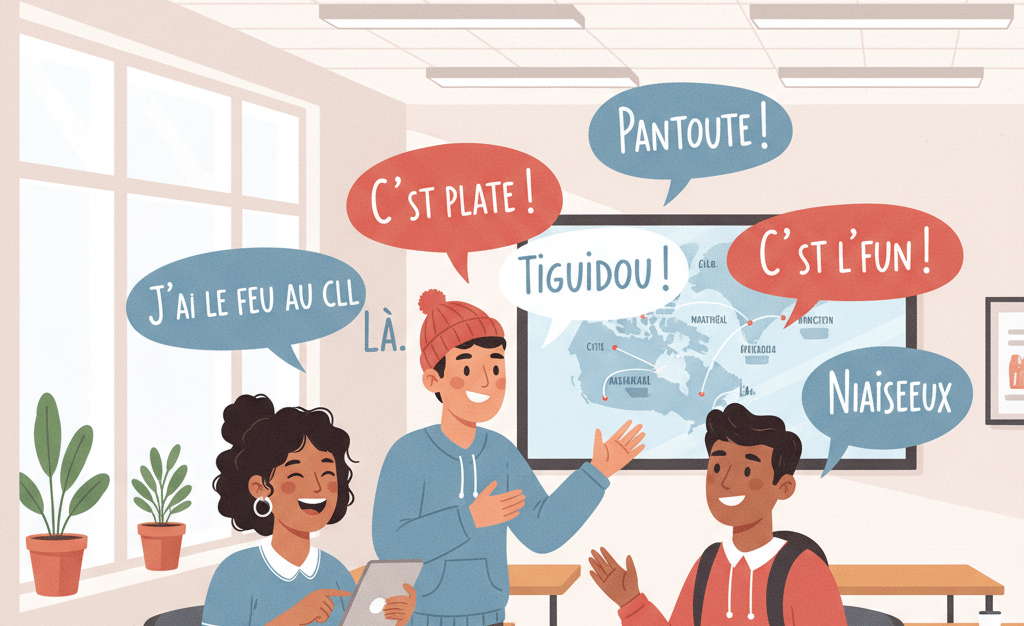
1. C'est plate!
Literal Meaning: It's flat!
Québécois Meaning: It's boring! / That sucks! / It's dull!
How to use it: "Le film était vraiment plate." (The movie was really boring.)
Why it's useful: You'll hear this everywhere to describe anything from a tedious class to a disappointing event.
2. J'ai le feu au cul.
Literal Meaning: I have fire in my butt.
Québécois Meaning: I'm in a hurry. / I'm pressed for time.
How to use it: "Désolé, je ne peux pas rester, j'ai le feu au cul!" (Sorry, I can't stay, I'm in a hurry!)
Why it's useful: A vivid and common way to express urgency.
3. Pantoute!
Literal Meaning: (No direct literal translation, comes from "pas en tout")
Québécois Meaning: Not at all! / Absolutely not!
How to use it: "Tu es fatigué? Pantoute!" (Are you tired? Not at all!)
Why it's useful: A much more emphatic and common way to say "pas du tout" in Quebec.
4. Avoir de la misère.
Literal Meaning: To have misery.
Québécois Meaning: To have difficulty / To struggle with something.
How to use it: "J'ai de la misère avec mes verbes irréguliers." (I'm struggling with my irregular verbs.)
Why it's useful: Perfect for expressing academic or general life struggles.
5. Tiguidou!
Literal Meaning: (No literal meaning)
Québécois Meaning: Alright! / Okay! / Everything's good!
How to use it: "On se voit à 19h? Tiguidou!" (See you at 7 PM? Tiguidou!)
Why it's useful: A super cheerful and informal way to agree or confirm something.
6. C'est l'fun!
Literal Meaning: It's the fun! (Anglicism)
Québécois Meaning: It's fun! / That's fun!
How to use it: "Aller au chalet en hiver, c'est vraiment l'fun!" (Going to the cottage in winter is really fun!)
Why it's useful: A common and direct anglicism that's fully integrated into Québécois French.
7. Là.
Literal Meaning: There.
Québécois Meaning: This one is tricky! It's often used as a filler word or to add emphasis, similar to "you know" or "right?"
How to use it: "Je te l'ai dit, là!" (I told you, you know!) or "Qu'est-ce que tu fais, là?" (What are you doing, there/now?)
Why it's useful: Mastering the subtle nuances of "là" will make you sound incredibly natural. It's often at the end of a sentence.
8. Niaiseux / Niaiseuse.
Literal Meaning: Silly / Foolish.
Québécois Meaning: Stupid / Annoying / Someone who jokes around too much.
How to use it: "Arrête d'être niaiseux et fais tes devoirs!" (Stop being silly/annoying and do your homework!)
Why it's useful: A versatile term for lighthearted teasing or expressing frustration.
9. C'est correct.
Literal Meaning: It's correct. (Anglicism)
Québécois Meaning: It's okay. / It's fine.
How to use it: "Ne t'inquiète pas, c'est correct." (Don't worry, it's okay.)
Why it's useful: Another direct anglicism widely used in Quebec.
10. Tabarnak! (and its variations)
Literal Meaning: Tabernacle! (A religious vessel)
Québécois Meaning: An all-purpose expletive for shock, anger, frustration, or even joy (depending on context).
How to use it: "Tabarnak, j'ai oublié mes clés!" (Damn, I forgot my keys!) Use with caution, it's strong!
Why it's useful: You will definitely hear this. While you might not use it yourself, recognizing it is crucial for understanding. Often softened to "Tabarnouche" or "Tabarouette" for less offensive versions.
Practice Makes Perfect!
The best way to get comfortable with these expressions is to hear them and try using them. Watch Québécois TV shows (like "Les Bougon" or "Unité 9" – though maybe start with some lighter fare!), listen to music from Quebec artists, or even try to strike up a conversation with a Francophone Canadian.
What are some of your favourite Québécois expressions? Share them in the comments below!
Ready to dive deeper into Canadian French or ace your next French exam? Check out my online courses and resources tailored specifically for Canadian students 👉 https://tinyurl.com/French-details