
Canada’s 2026 PR Roadmap: New Pathways, Sector Programs, and What It Means for Immigrants
Discover Canada’s new 2026 PR pathways focused on agriculture, caregivers, construction, H-1B talent and rural communities. See what changed and who benefits.
12/5/20253 min read
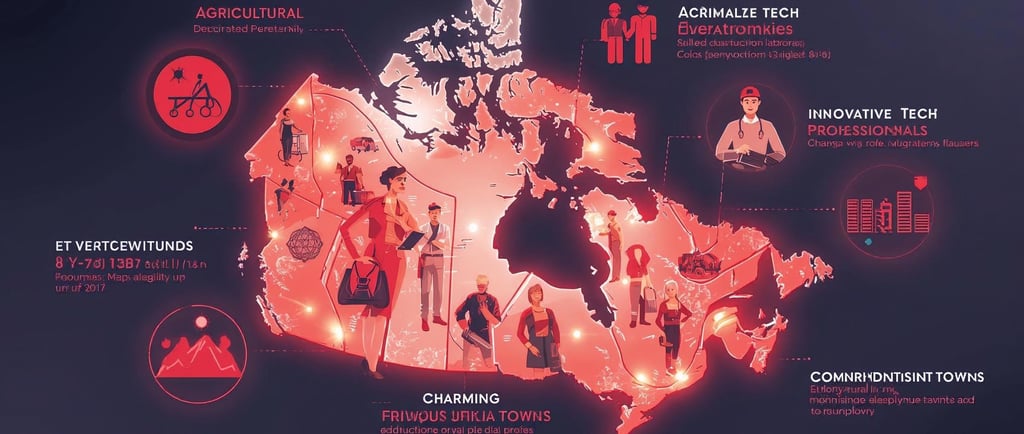
Canada’s 2026 PR Roadmap: What Changed and Why It Matters for Immigrants
Canada has announced major updates to its permanent-residence (PR) strategy for 2026—marking one of the most significant shifts in immigration policy in the last decade. Instead of broad, high-volume intakes, the country is now prioritizing targeted, employer-driven pathways that directly address labour shortages and help stabilize local communities.
The new roadmap also focuses on converting temporary residents already in Canada into permanent residents, reshaping how individuals plan their long-term future in the country.
In this blog, we break down what’s changing, why it matters, and how newcomers can benefit.
1. A Strategic Pivot Toward Labour-Market Needs
For years, Canada relied on large annual intake targets to meet population and economic goals. But with rising pressures on housing, healthcare, settlement capacity, and the economy, the government is refining its approach.
What’s new in 2026?
Instead of one-size-fits-all immigration targets, Canada is creating sector-specific and region-specific PR pathways to fill Canada’s most urgent workforce gaps.
This includes:
A dedicated PR pathway for agriculture and fish processing
A permanent Economic Mobility Pathways Pilot (EMPP)
Reopened home-care provider PR streams
New rural and Francophone community programs
A fast-track PR option for H-1B holders
Dedicated admissions for the construction sector
This shift signals a more precise, employer-aligned immigration model, ensuring newcomers directly support sectors that keep Canada’s economy functioning.
2. A New Sector-Specific PR Route for Agriculture & Fish Processing
Labour shortages in agriculture and seafood processing have been critical for years. Seasonal work patterns and aging rural populations have made it difficult for employers to retain workers.
The 2026 solution:
Canada will launch a specialized permanent-residence stream for workers in:
Farming
Agriculture processing
Seafood and fish processing
Why it matters:
This is a historic move—workers who were traditionally stuck in temporary programs (like the TFWP) will now have a direct PR pathway.
3. EMPP Becomes Permanent
The Economic Mobility Pathways Pilot (EMPP) has been helping skilled refugees immigrate to Canada through economic programs. In 2026, it becomes a full, permanent pathway.
What this means:
More refugee-skilled workers can fill high-demand roles.
Employers gain access to a previously untapped talent pool.
The program’s expansion strengthens Canada’s humanitarian and economic goals simultaneously.
4. Home-Care Provider PR Streams Reopen
Demand for caregivers—especially for children, seniors, and persons with disabilities—is surging as Canada’s population ages.
The updated 2026 plan:
The Home Child Care Provider and Home Support Worker programs will reopen with improved criteria.
The focus is on quicker PR processing and clearer employer requirements.
This benefits:
Caregivers already working in Canada
Families struggling to find long-term support
5. Rural and Francophone Pilots Get New Life
Small towns and French-speaking communities across Canada face population decline and worker shortages. To protect their economic and cultural vitality:
Canada is launching:
New Rural Community Immigration Pilots
Expanded Francophone community pathways
These programs aim to attract immigrants to areas that need population growth the most, strengthening both local economies and linguistic diversity.
6. Fast-Track Options for H-1B Holders
Following the overwhelming success of the H-1B open work permit program (which filled in 48 hours), Canada is rolling out a fast-track PR pathway in 2026 for:
H-1B workers currently in the U.S.
Tech talent with Canadian job offers
Why this matters:
Canada aims to capture highly skilled professionals frustrated by long U.S. green card wait times—boosting its tech and innovation sectors.
7. Construction Sector Admissions: A Direct Response to the Housing Crisis
Canada’s housing shortage is tied to one critical issue: not enough skilled construction workers.
To fix this, Canada is creating a sector-specific PR admission stream for:
Carpenters
Electricians
Plumbers
Heavy-equipment operators
Other trades related to housing and infrastructure
This policy directly supports Canada’s goal to rapidly expand home construction nationwide.
8. Why the 2026 PR Strategy Changed
Three major factors shaped Canada’s new immigration direction:
A. Housing & Infrastructure Pressure
Faster population growth outpaced the availability of homes, public services, and transportation networks.
B. Labour Shortages in Essential Sectors
Industries like agriculture, healthcare, construction, and hospitality continue to struggle without sustained worker supply.
C. Temporary Residents Seeking Stability
Over 2.5 million temporary residents are currently in Canada. The new pathways help:
Reduce reliance on temporary workers
Offer stability to people already contributing to the economy
Improve employer retention
9. What This Means for Future PR Applicants
If you are:
Already in Canada on a work or study permit,
Working in agriculture, caregiving, construction, rural areas, tech, or Francophone communities, or
An H-1B holder in the U.S.
Then 2026 may offer some of the most accessible PR options ever introduced.
These programs reward:
✔ Canadian work experience
✔ Employer relationships
✔ Community integration
✔ Sectoral skills that match national needs
10. Final Thoughts: A More Targeted, Stable Immigration System
Canada’s 2026 PR roadmap represents a major transformation. Instead of casting a wide net, Canada is now building precision immigration pathways:
Targeted
Employer-focused
Regionally aligned
Designed to convert temporary workers into permanent contributors
For immigrants, this means more clarity, more stability, and more opportunities—especially if they are already in the country or working in priority sectors.